
At the crossroads of profound technological and societal changes, the car is the leading consumer good in OECD countries. It has undergone major transformations in recent years. CO2 tax, weight-related penalties, low-emission zones, purchase bonuses… These are all tools deployed in Europe to accelerate the adoption of electric vehicles (EVs).
This shift towards electrification is reshaping an industrial model that is more than a century old, upending its ecosystem, from supplier to manufacturer and from distributor to consumer.
What challenges are raised by this fast-paced change in value chains, and what impact will it have on the competitive landscape?
1 – An industrial model in the throes of disruption
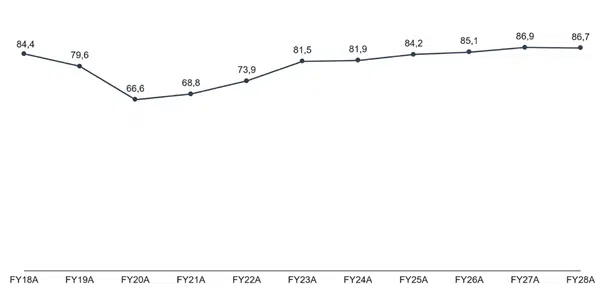
After a disruptive health crisis period and the years that followed when certain production lines were shut down, vehicle production is gradually returning to growth, despite a somewhat turbulent environment:[1]
VOLUMES PRODUCED GLOBALLY (MILLION UNITS)
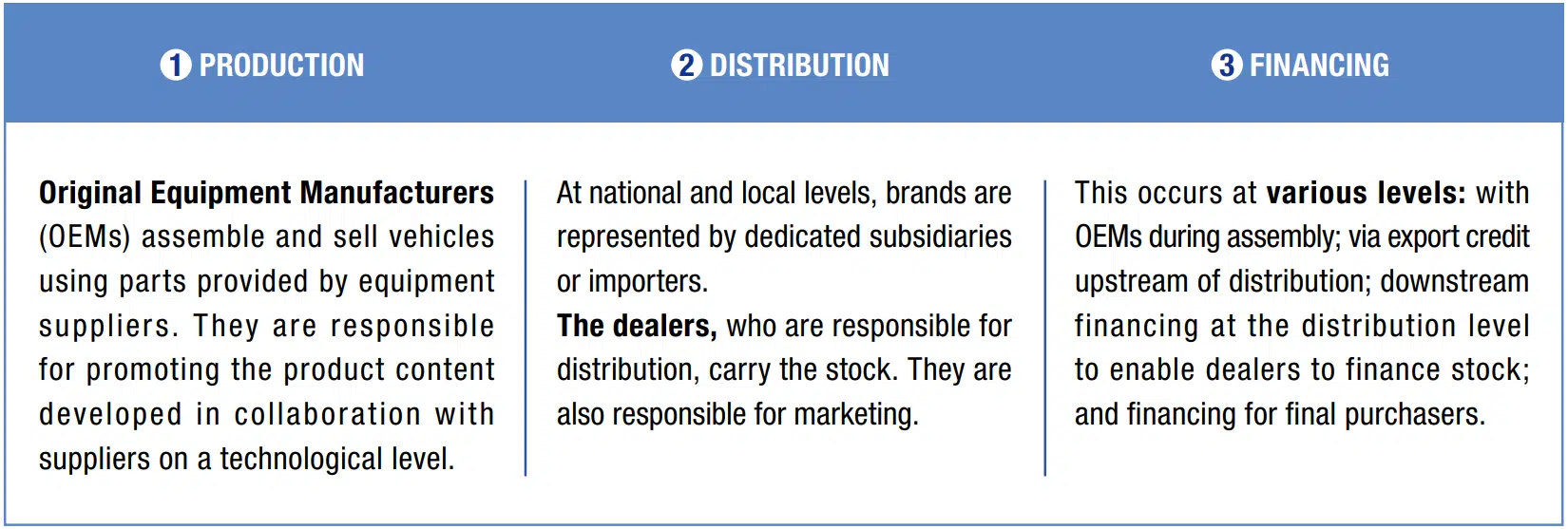
1. A three-tier value chain
The car industry was essentially structured during the 30-year post-WWII boom through the standardisation of models and assembly lines, under the influence of early 20th century Fordist theories. Its value chain can be broken down into three main components.
2. Electrification, digitalisation and regulation: what impact on the value chain?
In 1990, California passed a law in favour of the Zero-Emission Vehicle (ZEV), requiring that a minimum of 2% of vehicles produced by manufacturers for sale in the state be ‘green’ by 1998. Although the law was repealed in 2003, it has given rise to major programmes to develop greener vehicles. This fundamental trend is in play the world over, and it will lead to an accelerated shift towards electrification, transforming every link in the value chain.
- Production:
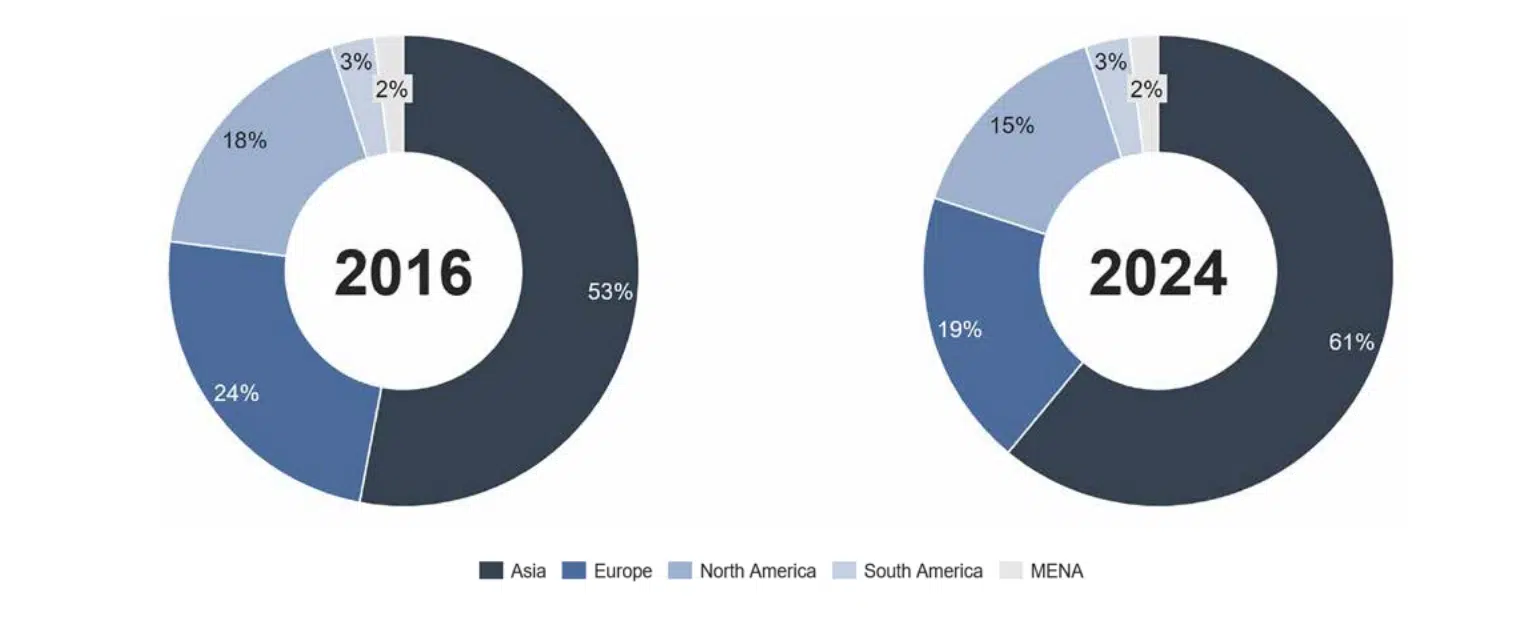
The centre of gravity of production sites is shifting as a result of changes in the industrial model and the components required. Traditional vehicle production, based on the internal combustion engine (ICE), has historically been concentrated in the United States, Europe and Japan. But this is gradually giving way to the production of electrified vehicles in Asia. In 2024, China was the world’s leading car producer (35%), well ahead of Europe (19%) and the United States (10%).[2]
Ultimately, ‘Dieselgate’ or the rigged engine scandal of 2015 – mostly associated with Volkswagen – only accelerated this transformation.
- Distribution:
The digital revolution is challenging dealers’ monopoly on physical distribution. Tesla, for example, is banking on its own distribution model, based on a more reasonable network with a limited number of sales outlets, supplemented by a few logistics centres. Some OEMs are also considering light models that capitalise on digital technology (to the detriment of the traditional dealer model), with the counterparty risk transferred to the brand’s national representative, who bears the stock.
- Financing:
Increasing regulatory pressure for greater transparency in financing activities is reducing the share of value captured by distributors on financing products. In the United Kingdom, for example, the FCA’s ban on discretionary commission via distributors has had a major impact on finance companies whose distribution relied on automotive intermediaries.
GLOBAL PRODUCTION BY REGION
More broadly, the new European CCD2 directive brings lease purchases within the scope of consumer credit, with the obligation to display an APR. In France, lease purchases will be subject to the usury rate from 2026, which should result in a reduction in the distribution margin captured via financing, possibly leading to a complete overhaul of remuneration mechanisms.
2 – A changing relationship with the car
1. Cost: a catalyst for change in relation to ownership
The price of new and used vehicles has risen significantly in recent years, mainly due to the combined effect of an increase in technological components and an overall rise in production costs:
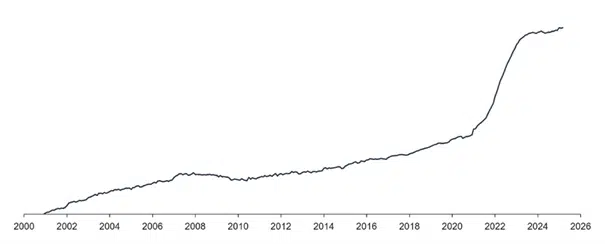
EVOLUTION OF THE HARMONISED INDEX OF CONSUMER
PRICES – VEHICLES (BASE 100 IN 2000)
Vehicle prices (new and used) rose by around 40% between 2000 and 2024 in the European Union, compared with a more limited increase in purchasing power. Outright purchases, which have traditionally accounted for the majority of sales, are gradually giving way to alternative financing solutions, centred on leasing with an option to purchase or on long-term leasing. Leasing allows consumers to control their budget and free themselves from any constraints linked to resale, with the residual value risk falling to the leasing company.
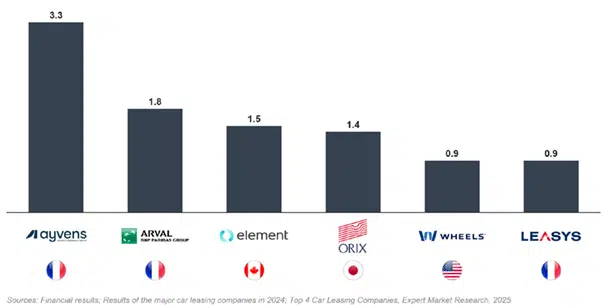
Since the long-term leasing business benefits large players who have strong negotiating power over OEMs, sector consolidation manoeuvres and other industrially synergistic projects are increasing. In 2023, for example, the merger of ALD (a subsidiary of Société Générale) with the Dutch player LeasePlan created a new leader, Ayvens, with a fleet of over 3 million vehicles.
LEADERS IN AUTOMOTIVE LEASING (MILLIONS OF VEHICULES IN 2024)
2. Use: redefining the driver experience
Technology is also changing the way the car is viewed. The pleasure of driving, once a key concern alongside safety, is now being overtaken by autonomous driving and embedded software. This fundamental change requires a rethink in the way the car is organised and designed.
Well aware of this development, manufacturers are looking to create unified software platforms as a key element in the deployment of their new strategies. This is a matter of urgency for incumbent players, particularly as the digital natives, like the Chinese, already have a clear lead in this area, with their user-centric models.
3 – The complete redefinition of the market balance
1. A manufacturing landscape in transformation…
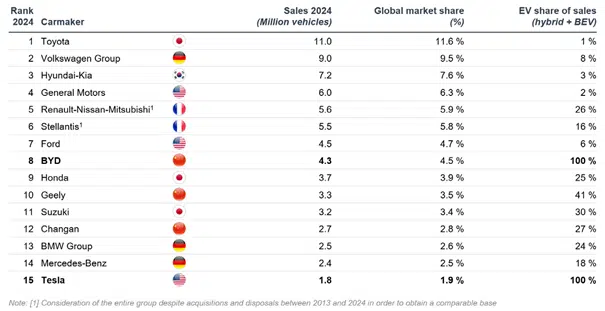
The shift towards electrification is fuelling the emergence of new players (Tesla, BYD, etc.). Their challenge to the established order is compounded by other issues related to securing supply chains, dominating new markets – particularly in Asia – and shifting from a manufacturing model to an assembly model.
Europe, still focused on ICE or hybrid models despite numerous initiatives and heavy investment to develop its industrial model, is seeing new exclusive leaders in electric vehicles emerge beyond its borders, ones whose production lines have been conceived, designed and developed around EV technology from the outset.
In less than a decade, fledgling manufacturers such as BYD and Tesla have become market leaders.
2. …reshaping the supplier landscape
With electrification, the supplier landscape is also changing, in light of the components now needed to manufacture cars: fewer engine parts and fewer fluids. Today’s key supply issues concern batteries and electronics more so than yesterday’s mechanical parts.
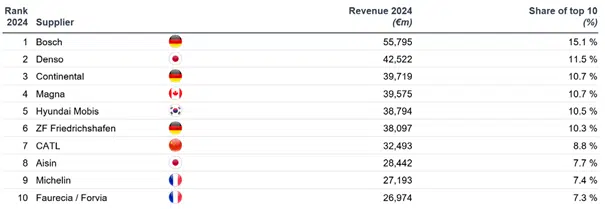
The main consequences of this shift are significant disruption among traditional suppliers and the recent emergence of new key players, such as CATL (batteries):
MAIN AUTOMOTIVE SUPPLIERS IN 2024: CATL ENTERS THE TOP 10
3. In this changing ecosystem, leasing companies need to rethink the issues surrounding residual value
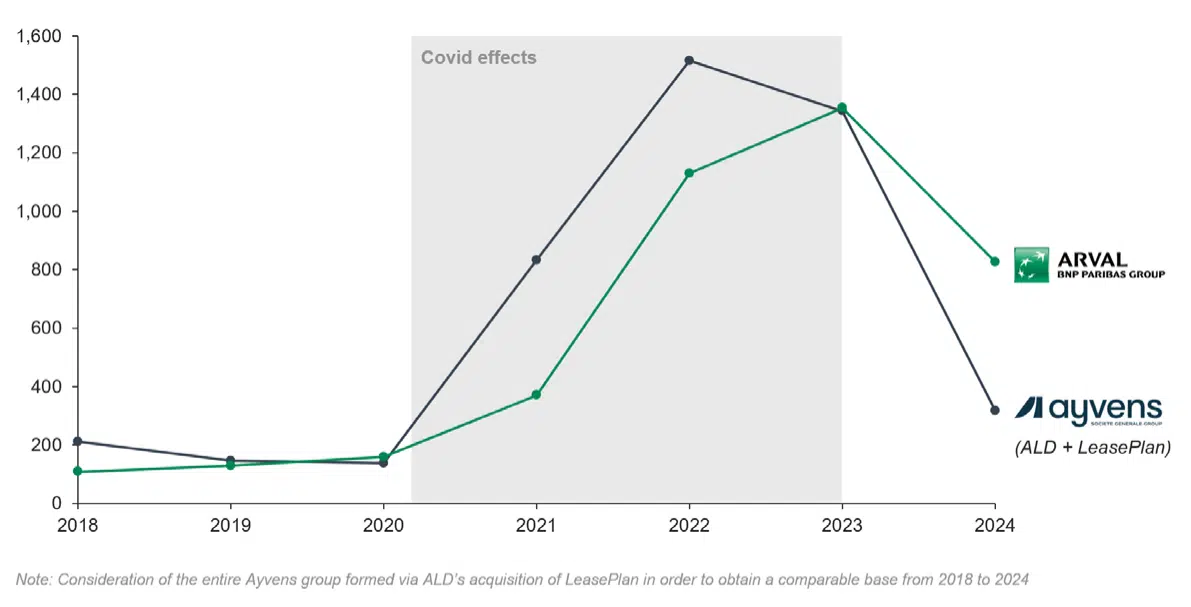
Leasing groups recorded significant capital gains on disposals in the wake of the health crisis, linked to a tight second-hand market as production lines were disrupted.
RESULT FROM VEHICLE SALES (€M)
Thanks to granular historical data on resale values, the residual values estimated at the time of the lease were generally reliable for ICE models, when excluding market anomalies (e.g. Covid). The story is very different in the EV segment, however, given the lack of hindsight and the many uncertainties surrounding the accelerated obsolescence of these vehicles – not just because of the battery, whose range is constantly increasing, but also because of the embedded software. This is a major challenge when the chassis and running gear (frame, bodywork, engine, mechanics, etc.) account for only ~20% of the value of an electric vehicle, compared with ~80% for its predecessor with an internal combustion engine, and when new contracts related to electric vehicles already represent 35% of production for some major leasing companies.
Leasing companies will therefore have to adjust their models to calculate the residual values of electric vehicles. Over the next few years, it is not unreasonable to expect a high degree of volatility in the results of disposals, with significant provision reversals for the most conservative leasing companies, and conversely large capital losses on disposals for the most ambitious.
Insurance companies will also have to adapt by gradually recalibrating premium levels, because while there are fewer parts in an electric vehicle, the cost of replacing them in the event of an accident is much higher.
Conclusion
After developing around a relatively stable industrial model for almost a century, the automotive industry has faced in recent years a range of challenges in terms of both technology and use.
In a world of heightened economic and geopolitical tensions, the issues of supply and control are crucial to the survival of some manufacturers, over and above the colossal investment required to transform their business models. Alongside these constraints, manufacturers will have to offer upgradable models to combat obsolescence: one of the key factors for success will be providing embedded software that is constantly updated in line with changes in customer use and expectations, in a similar vein to smartphones for which telephony is no longer the main function…

Amaury Pouradier Duteil, Partner, Accuracy
Maxime Exbrayat, Manager, Accuracy
Accuracy Talks Straight #14 – Industry insight