
Building always begins with belief. Belief in the solidity of materials, in the permanence of uses, in the stability of a world that we design to last. Yet the construction sector, the symbol of our mastery over space and time, is now being called upon to challenge not only its technical methods but also its cultural foundations. More than just a transition, it is undergoing a process of deconstruction.
The first belief to falter is that of irreversibility. For decades, building meant defining: forms, functions, flows. Climate urgency has brutally reminded us of the material weight of the built environment, with the construction and building sector accounting for nearly 34% of global CO2 emissions and 32% of global energy consumption.¹
Building without considering the life cycle, reversibility or the eventual dismantling of a structure is no longer acceptable. The future of construction is not merely a matter of standards. It requires a shift in perspective to one where buildings cease to be a result and instead become a stage in a process.
We must also deconstruct the myth of linear progress driven by the logic of ‘always more’: higher, faster, bigger. Architectural historian Sigfried Giedion noted that every technical revolution transforms the way we inhabit the world.²
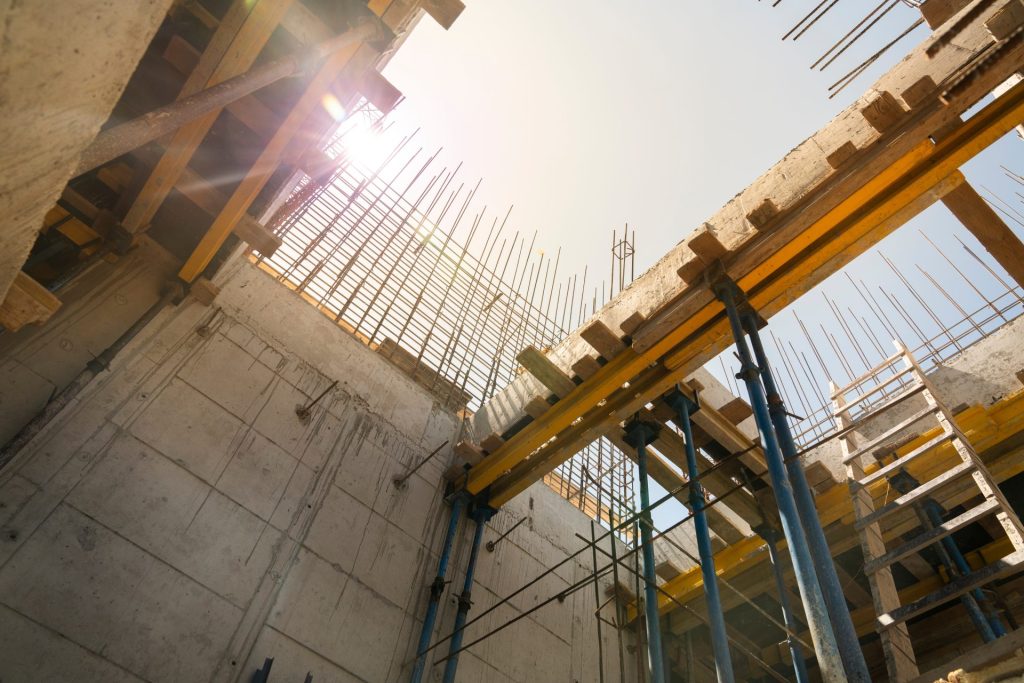
Today, this transformation is taking place under pressure, with constraints on resources and shortages of skilled labour. More than simple efficiency gains, practices like BIM, prefabrication and off-site industrialisation are profoundly shifting the relationship between design, execution and responsibility.
The building site is becoming a space for cognitive coordination as much as for material assembly.
Finally, we must question the heroic imagery of the builder. Where monumental works were once celebrated, constructive sobriety is now required. This may sometimes be experienced as a loss, but it is likely to become a new source of value and meaning.
As the philosopher Bruno Latour writes, it is no longer a question of ‘modernising’ the world, but of learning to ‘land’ in it.³
Deconstructing construction does not mean weakening it: it means letting go of some certainties in order to better build the ways in which we live, move and interact. The real building site may well be that of our own representations.